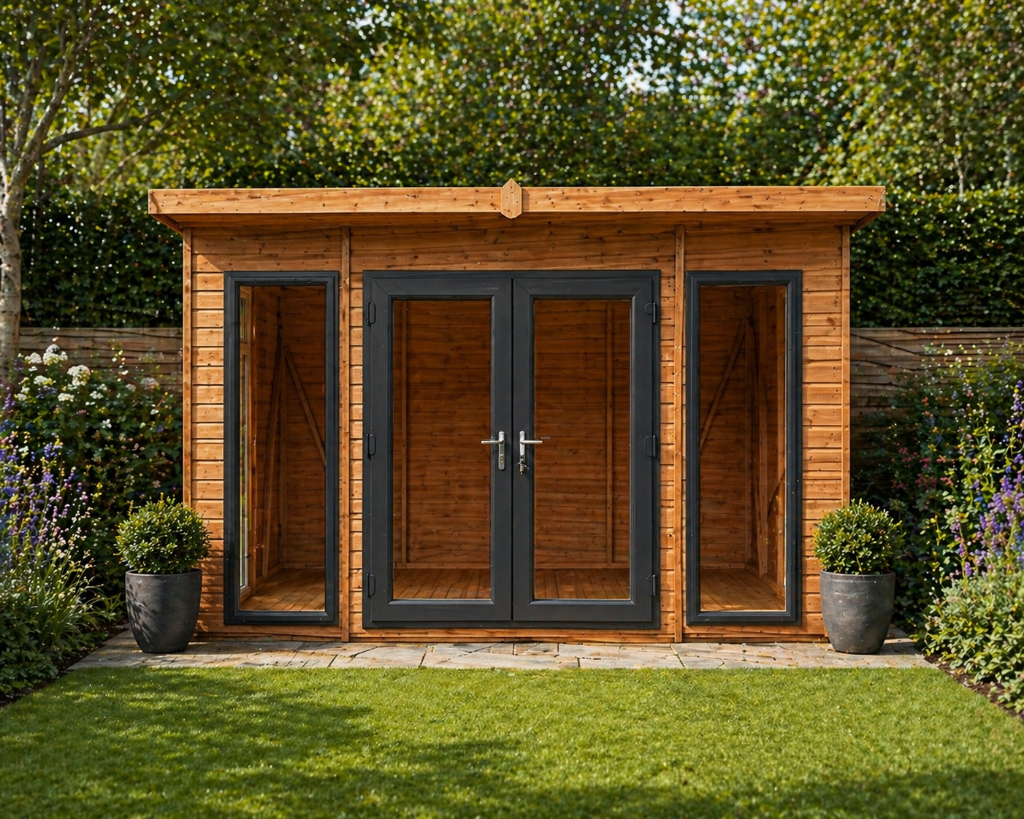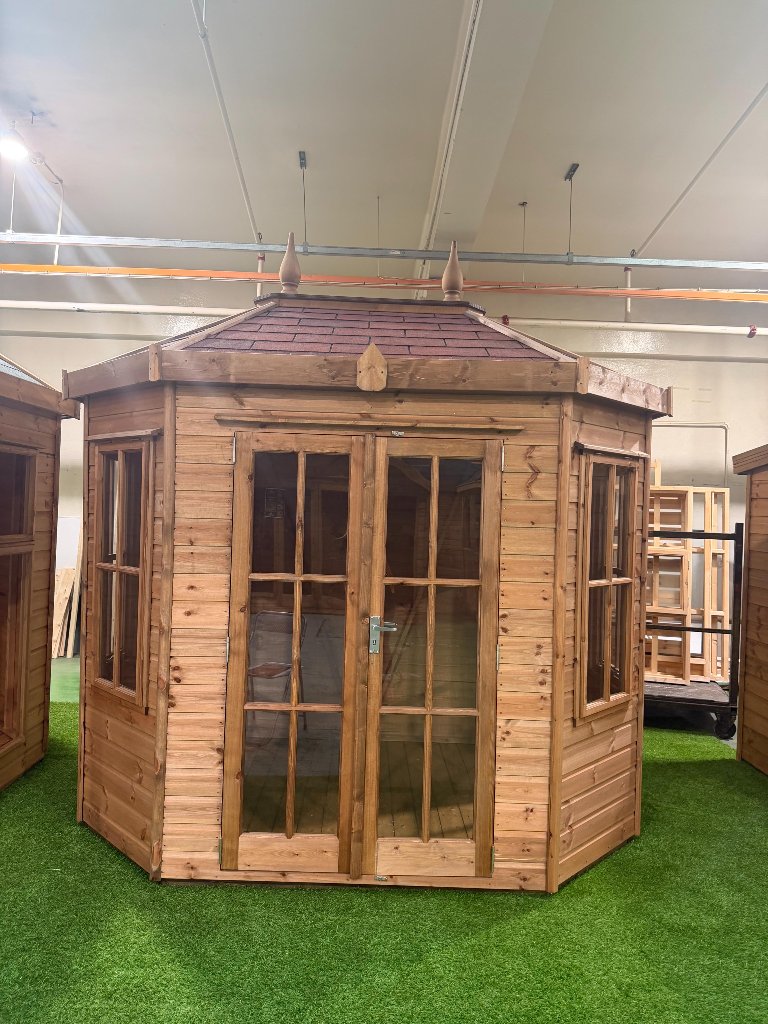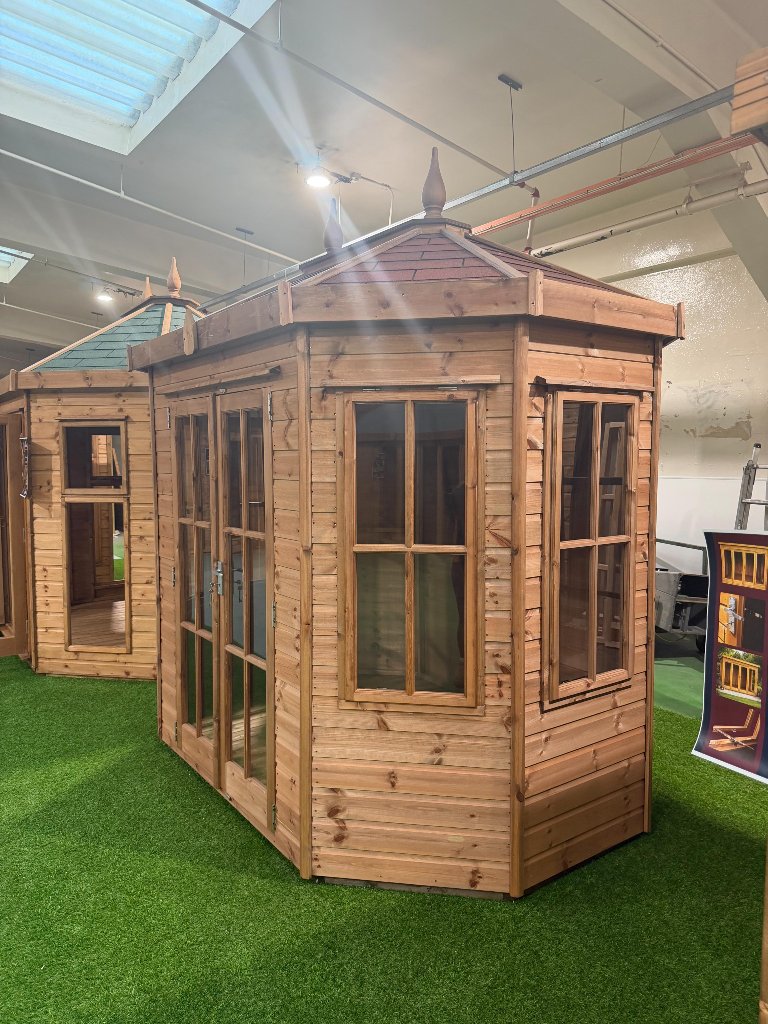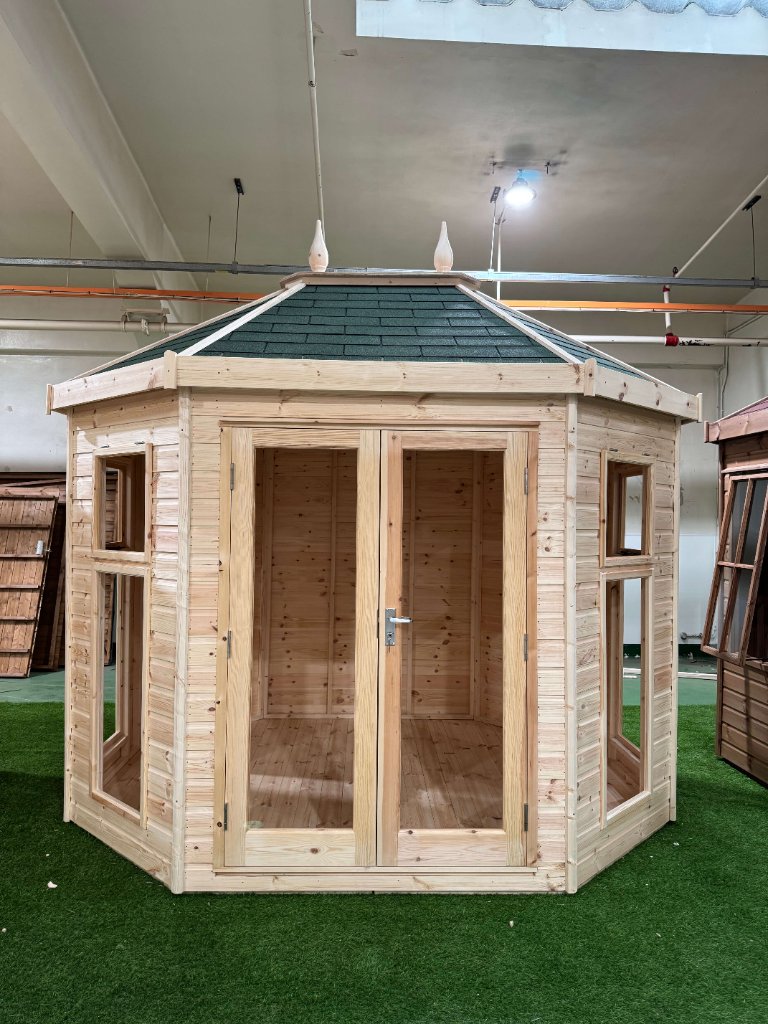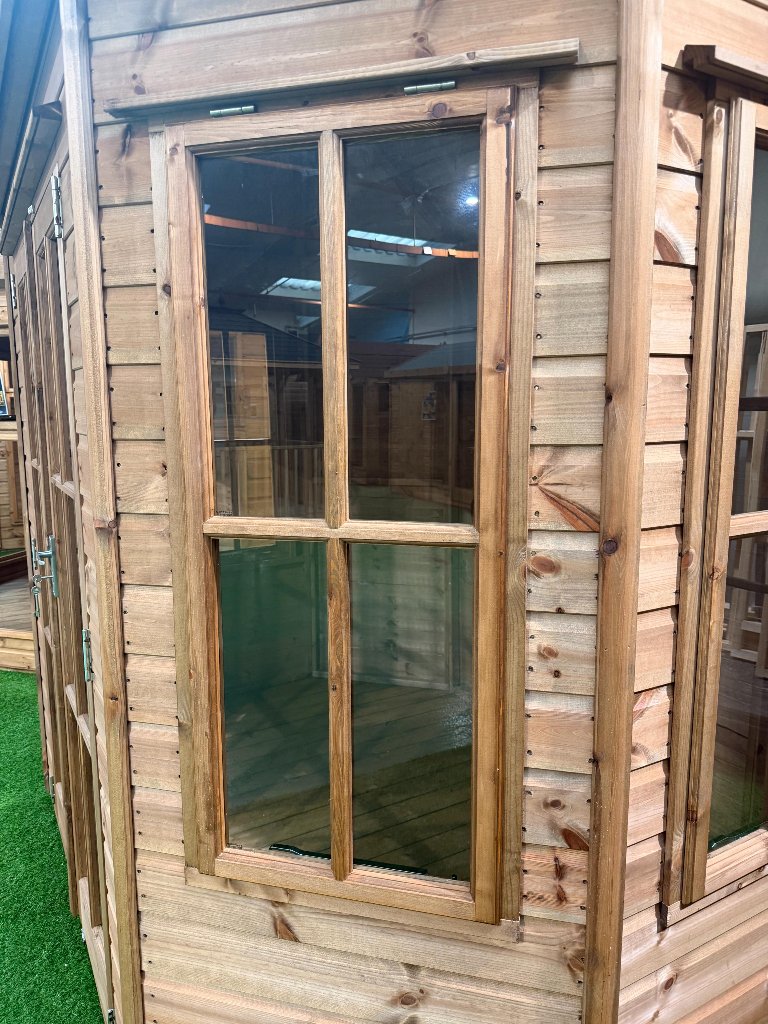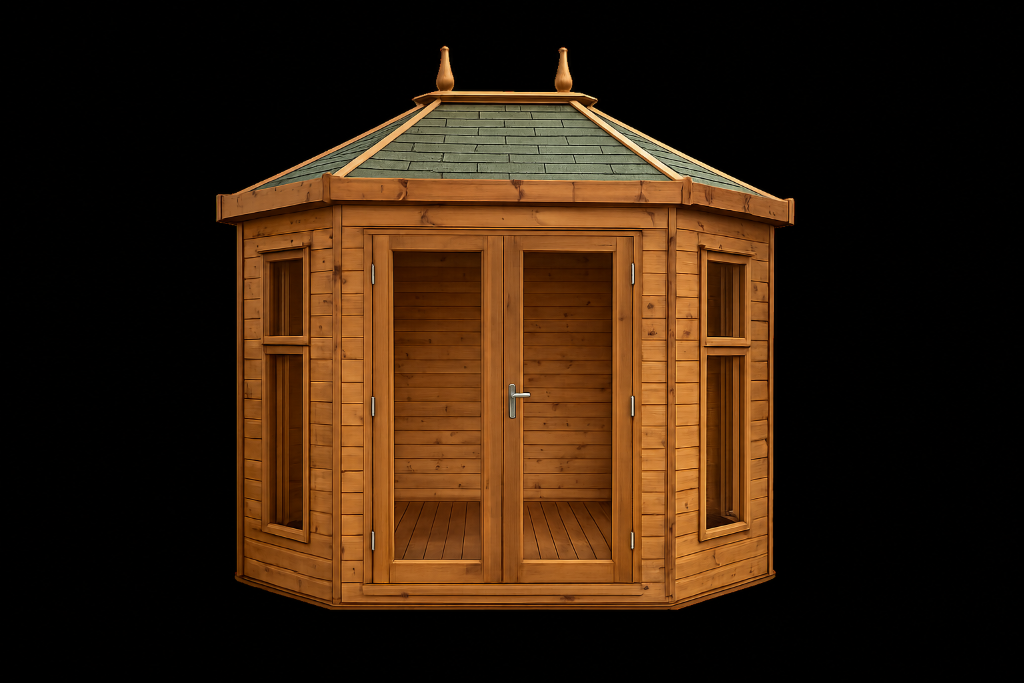
A timber garden building is an investment that should last 15 years or more with proper care. Regular maintenance protects the timber against moisture, UV damage and decay — keeping your shed or summerhouse looking great and structurally sound for years to come.
This guide covers everything from initial treatment to ongoing maintenance.
Why Maintenance Matters
Timber is a natural material that responds to its environment. Without protection, it will:
- Absorb moisture, causing swelling and warping
- Dry out in sunlight, causing cracking and splitting
- Lose its colour and turn grey
- Eventually succumb to rot and decay
A simple maintenance routine — taking just a few hours each year — will prevent all of these issues.
When to Treat Your Garden Building
New Buildings
If your building has been dip-treated (indicated by a golden brown or green colour), you should apply a protective wood treatment within the first few months of installation. Don't wait a year — the timber needs protection as soon as it's exposed to the elements.
If your building has been pressure-treated, you have more time, but applying a water-repellent finish will still extend the life of the timber.
Ongoing Maintenance
- Re-treat dip-treated timber every 1–2 years (required to maintain the anti-rot guarantee)
- Apply a water-repellent finish to pressure-treated timber every 2–3 years
- Inspect annually for any signs of damage, mould or rot
Choosing the Right Treatment
There are three main types of exterior wood treatment:
Wood Preservative
A preservative treatment (sometimes called wood stain) penetrates the timber to protect against rot, fungal decay and insect attack. It's the most important treatment for dip-treated buildings. Preservatives are available in clear or coloured formulations.
Wood Paint
Exterior wood paint sits on the surface of the timber, providing a coloured, opaque finish. Paint offers good UV protection but can flake or peel over time if the timber moves. Choose a microporous (breathable) paint that allows moisture vapour to escape from the timber.
Wood Oil
Wood oils penetrate the timber and nourish it from within, providing a natural-looking finish that doesn't crack or peel. They need reapplying more frequently than paint or preservative but are easy to maintain.
Preparing to Paint
Proper preparation is the key to a long-lasting finish:
- Clean the timber — use a stiff brush to remove dirt, algae and cobwebs. For stubborn growth, use a dilute bleach solution or specialist fungicidal wash, then rinse and allow to dry completely
- Sand rough areas — lightly sand any rough patches, splinters or previous flaking finish
- Fill gaps — use an exterior wood filler for any cracks or holes
- Treat cut ends — if any timber was cut during installation, apply end-grain preservative to the exposed surfaces
- Check the weather — choose a dry day with temperatures above 10°C and no rain forecast for 24 hours
How to Apply Treatment
- Stir thoroughly — don't shake; stirring prevents air bubbles
- Apply generously — use a good-quality brush, working in the direction of the grain
- Focus on joints — pay extra attention to the joints between boards, where water collects
- Treat the bottom — the lower 30cm of the building is most vulnerable to moisture; apply an extra coat
- Allow to dry — follow the manufacturer's recommended drying time between coats
- Apply a second coat — most treatments require at least two coats for adequate protection
Painting Your Garden Building
If you want to paint your building a specific colour, we offer a professional paint service on many of our summerhouses and garden rooms. Available colours include:
- Ivory — a warm, classic off-white
- Sage Green — a soft, natural green
- Country Cream — a traditional cream
- Mist Grey — a contemporary grey
- Forest Green — a rich, dark green
Paint is applied to the exterior cladding before installation, ensuring complete coverage and a professional finish.
Annual Maintenance Checklist
Each year, carry out these simple checks:
- Inspect the roof felt — look for tears, lifting or damage and replace if necessary
- Check for leaks — look for water stains inside the building, particularly around the roof and windows
- Clear gutters — if fitted, remove leaves and debris
- Check the base — ensure the building is still level and there's no water pooling underneath
- Oil hinges and locks — lubricate door hinges, window catches and any locking mechanisms
- Trim vegetation — cut back any plants growing against the building to allow air circulation
- Re-treat the timber — if due, apply a fresh coat of preservative or water-repellent
Common Problems and Solutions
Mould and Algae
Black or green patches on the timber indicate mould or algae growth. Clean with a fungicidal wash, allow to dry, then re-treat the timber.
Door Misalignment
If doors are sticking or won't close properly, check that the base is still level. Settlement can cause the building to shift. If the base is level, the hinges may need adjusting.
Roof Felt Damage
Torn or lifting felt should be replaced promptly to prevent water ingress. Use a high-quality mineral felt for the best durability.
Explore Our Range
All our garden sheds, summerhouses and garden rooms are built from quality treated timber and designed for longevity. Visit our show site in Newark-on-Trent to see our buildings in person, or browse our range online.