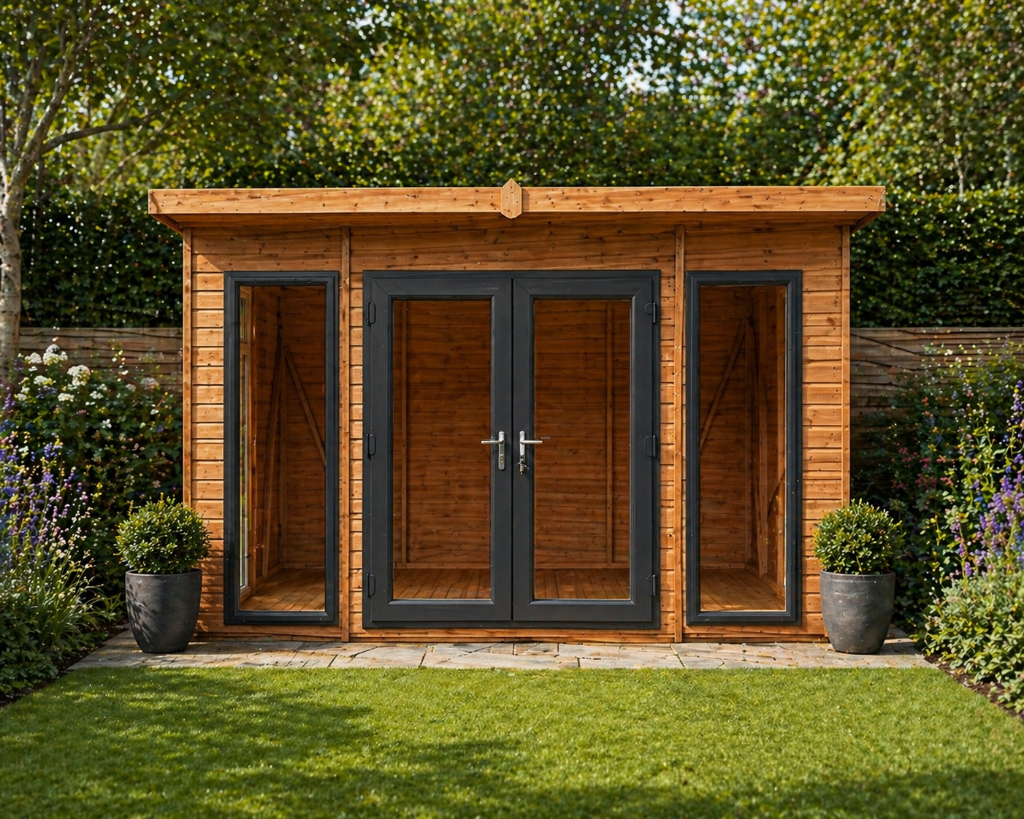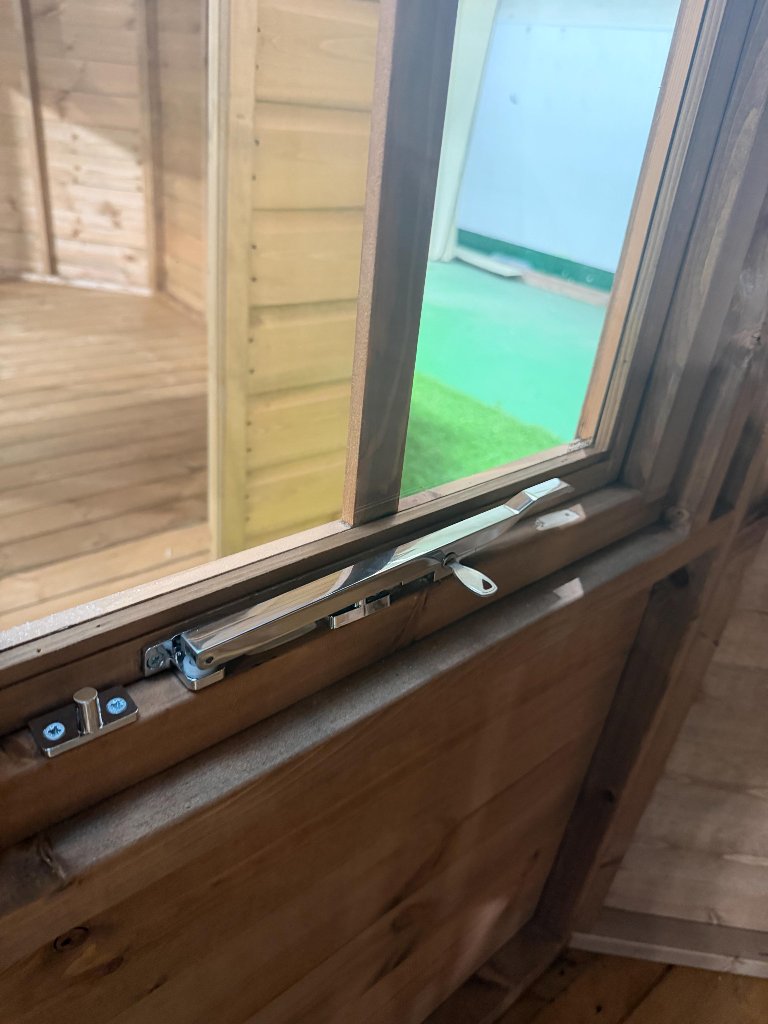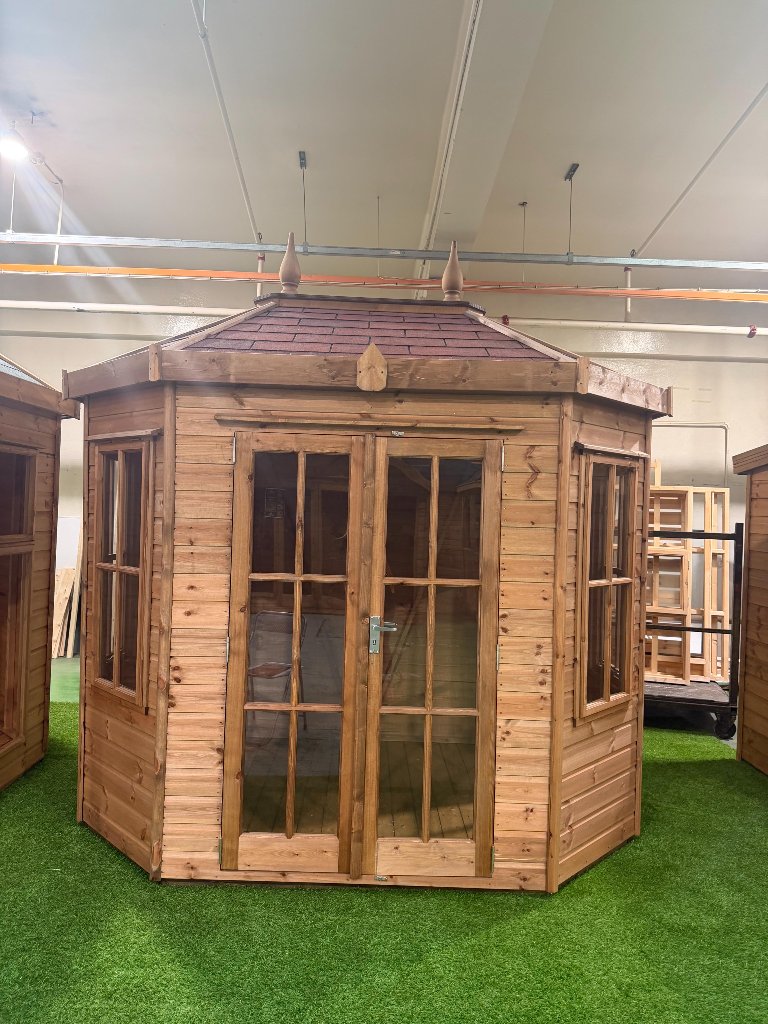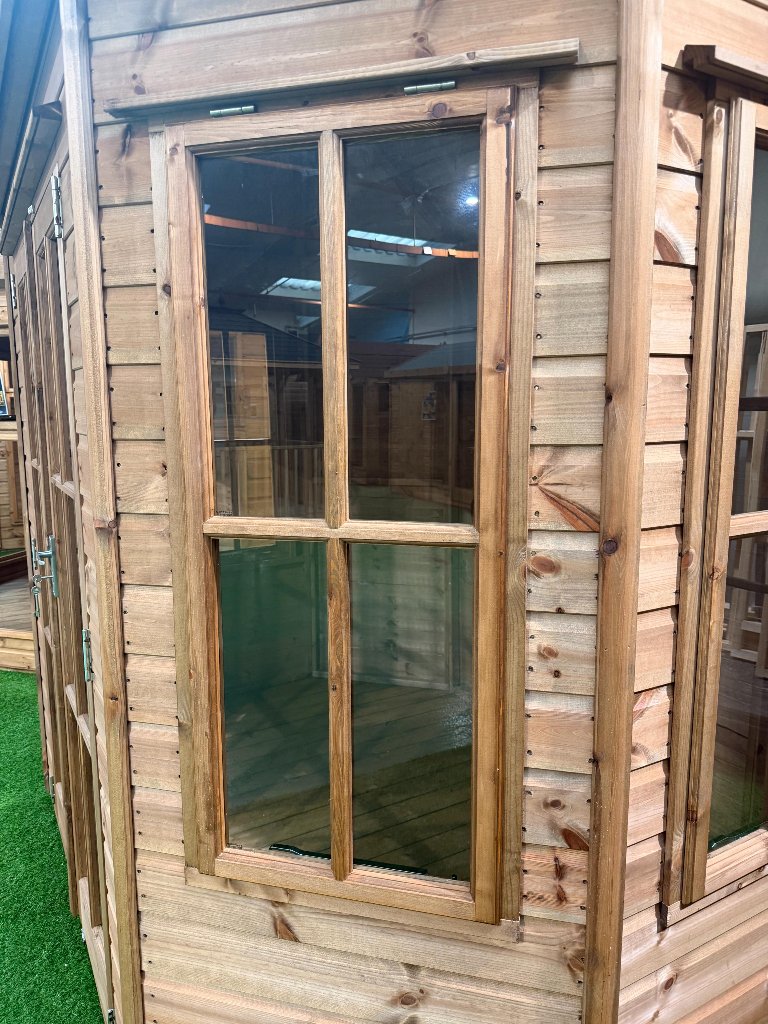
The British climate can be tough on timber garden buildings. From freezing winters to damp autumns and humid summers, each season brings different challenges. This seasonal maintenance calendar will help you keep your shed, summerhouse or garden room in top condition all year round.
Spring (March–May)
Spring is the ideal time for a thorough inspection and any necessary maintenance after winter.
Tasks
- Inspect the roof — check for any damage caused by winter storms, fallen branches or snow. Look for lifted, torn or missing felt/tiles
- Check for winter damage — look for cracked boards, loose fixings or any structural movement
- Clean the exterior — remove algae, moss and dirt with a stiff brush and mild detergent or fungicidal wash
- Re-treat timber — if your building is dip-treated and due for its annual treatment, spring is the perfect time (dry weather, moderate temperatures)
- Clear gutters — if fitted, remove leaves and debris that accumulated over autumn and winter
- Check the base — ensure the building is still level and there's no erosion or settling around the base
- Oil hinges and locks — lubricate all moving parts after the cold winter months
- Trim vegetation — cut back any plants that have grown against the building over the past year
Why Spring?
Spring offers moderate temperatures and lower rainfall, making it ideal for applying timber treatments. The timber has had time to dry out after winter, and you have the whole summer ahead to enjoy the results.
Summer (June–August)
Summer is about enjoying your garden building — but a few simple checks will keep it in good shape.
Tasks
- Ventilate — on hot days, open windows and doors to prevent heat build-up, especially in summerhouses and garden rooms
- Check for wasp nests — wasps often build nests in or around garden buildings during summer. Deal with them promptly if found
- Monitor for condensation — humid summer air can cause condensation inside the building, particularly overnight. Ensure ventilation is adequate
- Inspect after storms — summer thunderstorms can be intense. Check the roof and exterior after any severe weather
- Keep plants in check — fast-growing summer vegetation can quickly encroach on the building. Keep climbers and shrubs trimmed back
Summer Tips
- If your building gets very hot in direct sun, consider adding shade with a parasol, awning or strategic planting
- Garden rooms with insulation will stay cooler than uninsulated sheds — another reason to choose an insulated building for regular use
Autumn (September–November)
Autumn is the most important maintenance season — preparing your building for the harsh winter ahead.
Tasks
- Clear gutters — autumn leaves will fill gutters quickly. Clear them regularly to prevent overflow and water damage
- Sweep the roof — carefully remove leaves and debris from the roof surface to prevent moisture retention
- Check the roof felt — ensure it's secure before winter storms arrive. Replace any damaged sections now rather than in freezing conditions
- Inspect seals — check the seals around windows and doors for gaps that could let in draughts and rain
- Treat cut ends — if any timber was cut during installation and the cut ends are exposed, treat them with end-grain preservative
- Apply water repellent — if you haven't already, apply a water-repellent treatment to help the timber shed winter rain
- Remove climbing plants — if you've grown annual climbers (like sweet peas) on the building, remove the dead foliage
- Secure loose items — store loose garden items inside the shed before winter storms
Why Autumn Matters
Autumn maintenance prevents the vast majority of winter damage. A few hours of work in October can save you from expensive repairs in spring. The key priorities are keeping water out and ensuring the building is weathertight before the first frosts.
Winter (December–February)
Winter is about monitoring rather than maintenance. The cold, wet weather makes treatment application impractical, but regular checks will catch any problems early.
Tasks
- Check after storms — high winds and heavy rain can cause damage. Inspect the roof, walls and base after any severe weather
- Remove snow — if heavy snow accumulates on the roof, carefully brush it off to prevent excessive weight loading (particularly important for flat or pent roofs)
- Monitor for leaks — check inside the building regularly for any signs of water ingress, particularly around the roof and windows
- Keep ventilation clear — don't let snow or debris block any vents. Air circulation prevents condensation and mould
- Check the base — ensure freezing ground hasn't caused any movement or heave
- Don't apply treatments — wait for warmer, drier weather. Treatments won't penetrate or dry properly in cold, damp conditions
Winter Tips
- If you use your garden building in winter (e.g., a garden office), ensure heating is adequate and check for condensation regularly
- Keep the area around the building clear of snow to prevent moisture wicking into the timber
Quick Reference Calendar
| Season | Key Tasks | |--------|----------| | Spring | Inspect, clean, re-treat timber, oil hinges, clear gutters | | Summer | Ventilate, check for wasps, monitor condensation, trim plants | | Autumn | Clear gutters, check roof, inspect seals, apply water repellent | | Winter | Monitor after storms, remove snow, check for leaks |
Year-Round Maintenance Tips
Regardless of the season, these principles apply all year:
- Keep vegetation clear — plants touching the timber trap moisture and promote rot. Maintain at least 30cm clearance
- Ensure good drainage — water should never pool around or under the building. The base should be slightly above ground level
- Don't store damp items — wet items stored inside a shed raise humidity and promote mould and rot
- Check regularly — a quick visual inspection every few weeks catches problems before they become serious
- Address issues promptly — a small repair now is much cheaper than a major one later
Need Help?
If you notice any issues with your garden building that need professional attention, contact us and we'll be happy to advise. For maintenance products and treatments, your local hardware store or garden centre will stock everything you need.
Explore our range of garden sheds, summerhouses and garden rooms — all built from quality treated timber and designed for longevity.