Fencing, trellises, planters, pergolas — timber isn't just for garden buildings. At Buckley Garden Buildings, we work with timber across a range of garden structures. This guide explains the different types of timber garden structures and how they complement your garden buildings.
Why Timber for Garden Structures?
Timber is the natural choice for garden structures:
- Natural appearance — timber blends seamlessly with garden planting and the landscape
- Versatility — timber can be cut, shaped and finished to any design
- Sustainability — FSC-certified timber from responsibly managed forests is an environmentally responsible choice
- Durability — treated timber lasts 10–15+ years outdoors
- Repairability — unlike metal or plastic, timber can be sanded, treated and repaired
Fencing
Garden fencing defines boundaries, provides privacy and screens unsightly areas. Common styles include:
Closeboard Fencing
Closeboard (or featheredge) fencing is the strongest and most durable fence type. Vertical boards overlap each other, fixed to horizontal arris rails. This creates a solid, robust fence that withstands wind and impact.
Lap Panel Fencing
Lap (or waney) panel fencing is the most common and cost-effective option. Panels are pre-made with horizontal boards overlapped within a timber frame. They're quicker to install than closeboard but less durable.
Trellis Fencing
Trellis panels feature an open lattice design — they provide partial screening and support for climbing plants. Trellis is often used as a topper above solid fencing to add height without blocking light, or as a standalone screen for dividing garden areas.
Timber Posts
All timber fencing relies on sturdy posts. Pressure-treated timber posts set in concrete provide the best longevity. Postcrete (rapid-set concrete) makes installation quick and straightforward.
Trellises and Screens
Trellises serve multiple purposes in the garden:
- Supporting climbers — clematis, jasmine, roses, honeysuckle and other climbing plants
- Creating privacy — without blocking light or air, as a solid fence would
- Dividing spaces — separating different garden zones (e.g., a vegetable patch from a lawn)
- Screening — hiding bins, compost heaps, or unsightly structures
- Decorative feature — a trellis against a blank wall adds interest and planting opportunities
Freestanding trellis screens can be used to create a garden room effect — defining an outdoor seating area without building a solid wall.
Planters and Raised Beds
Timber planters and raised beds are a practical and attractive way to grow plants, vegetables and herbs:
Raised Beds
Raised beds are perfect for vegetable growing. They provide:
- Improved drainage — especially important on clay soils
- Warmer soil — the soil in raised beds warms up faster in spring, allowing earlier planting
- Easier access — less bending, making gardening more comfortable
- Defined growing area — easier to manage crop rotation and prevent soil compaction
Use pressure-treated timber for raised beds in contact with the ground. The treatment is food-safe and won't leach into the soil.
Planters
Timber planters come in all shapes and sizes — from small window boxes to large statement planters. They're ideal for:
- Patios and decking areas
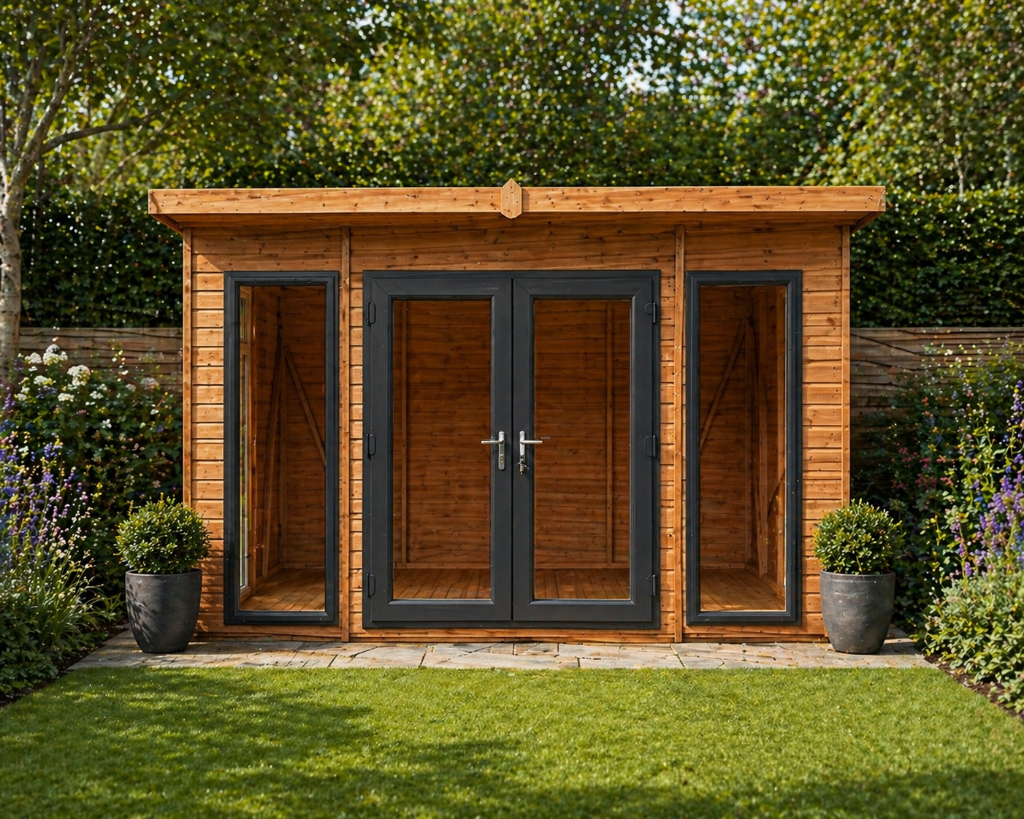
- Either side of a shed or summerhouse door
- Creating a focal point in the garden
- Growing plants where garden soil is poor or nonexistent
A planter either side of your summerhouse door, planted with fragrant flowers, creates a beautiful entrance.
Pergolas and Gazebos
Pergolas
A pergola is a timber framework of posts and horizontal beams, often with open slats across the top. While it doesn't provide a waterproof roof, it creates a defined outdoor space and supports climbing plants for partial shade.
Pergolas are ideal for:
- Covering a patio or seating area
- Creating a walkway or garden path feature
- Supporting wisteria, roses or grapevines
- Extending the usable garden space alongside a summerhouse or garden room
Gazebos
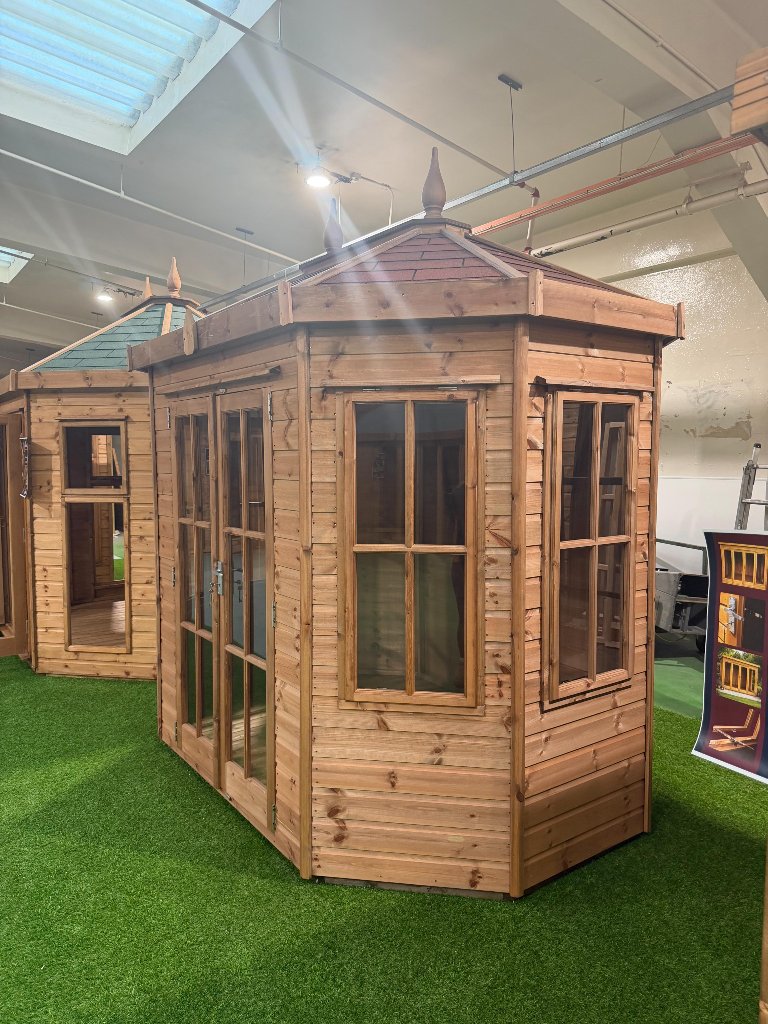
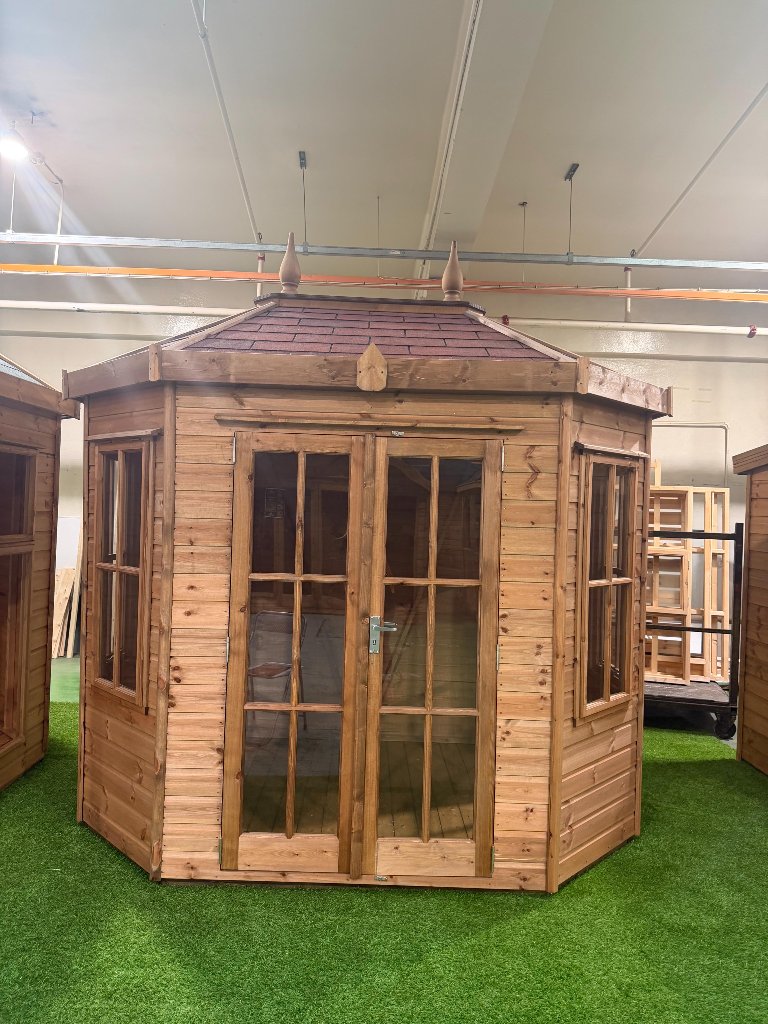
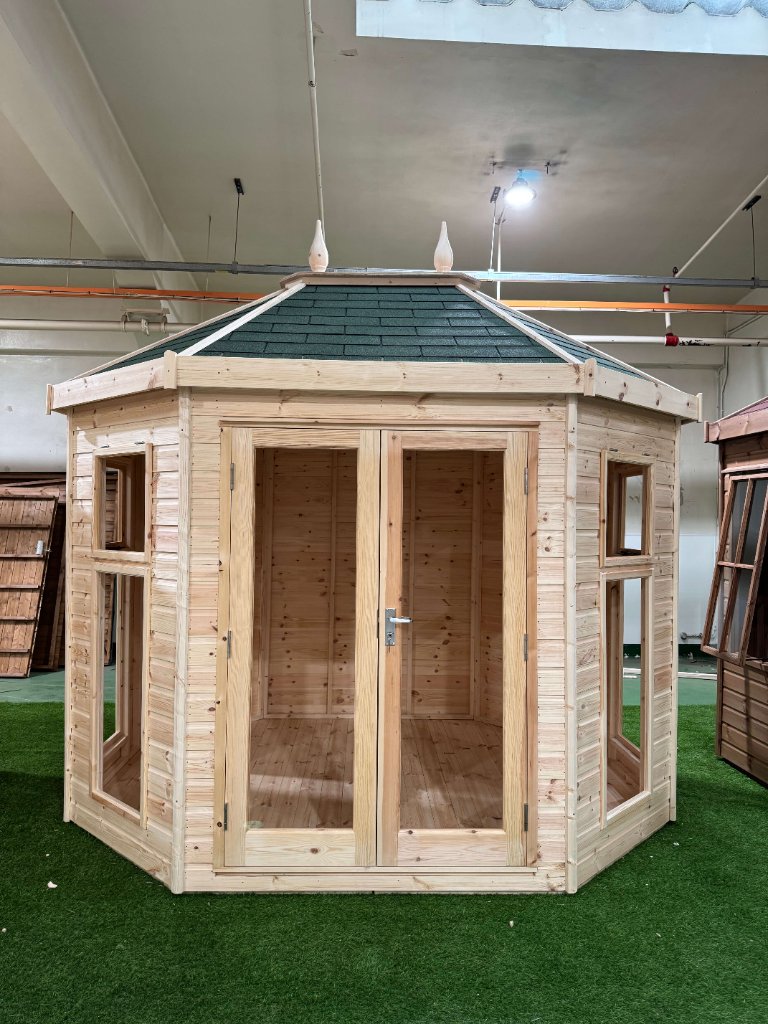
A gazebo is a freestanding, roofed garden structure — typically octagonal or hexagonal — with open sides. It provides a sheltered seating area with a solid roof. While not fully enclosed like a summerhouse, a gazebo offers protection from sun and light rain.
Timber Decking
Timber decking extends your living space into the garden. It provides a level, durable surface for outdoor seating, dining and entertaining.
Decking is particularly effective when combined with a garden building:
- A deck in front of a summerhouse creates a seamless indoor-outdoor space
- A decked path leads the eye toward a garden room or shed
- A decked seating area beside a garden office provides an outdoor break space
Use grooved decking boards for better grip in wet weather, and treat the timber annually to maintain its appearance and longevity.
Choosing Timber That Complements Your Garden Building
If you're adding garden structures alongside a shed, summerhouse or garden room, consider:
- Matching the timber — use the same type of timber (e.g., Scandinavian redwood) for a cohesive look
- Coordinating the colour — if your garden building is painted sage green, paint your planters and trellis to match
- Consistent treatment — use the same timber treatment on all structures for a unified appearance
- Architectural harmony — a traditional apex shed suits closeboard fencing and rustic trellis; a contemporary garden room suits clean-lined planters and minimalist screening
Maintenance of Timber Structures
All timber garden structures need maintenance:
- Annual treatment — apply wood preservative each year to dip-treated timber
- Check for rot — inspect posts where they enter the ground, as this is where rot starts
- Keep vegetation clear — don't let plants grow directly against timber structures, as they trap moisture
- Clean annually — remove algae and moss with a stiff brush and mild detergent
Read our seasonal maintenance calendar for a full year-round guide.
Explore Our Garden Buildings
While we specialise in garden buildings rather than fencing and landscaping, all our garden sheds, summerhouses, garden rooms and playhouses are built from the same quality treated timber that makes excellent garden structures. Contact us if you have a specific timber garden building requirement.