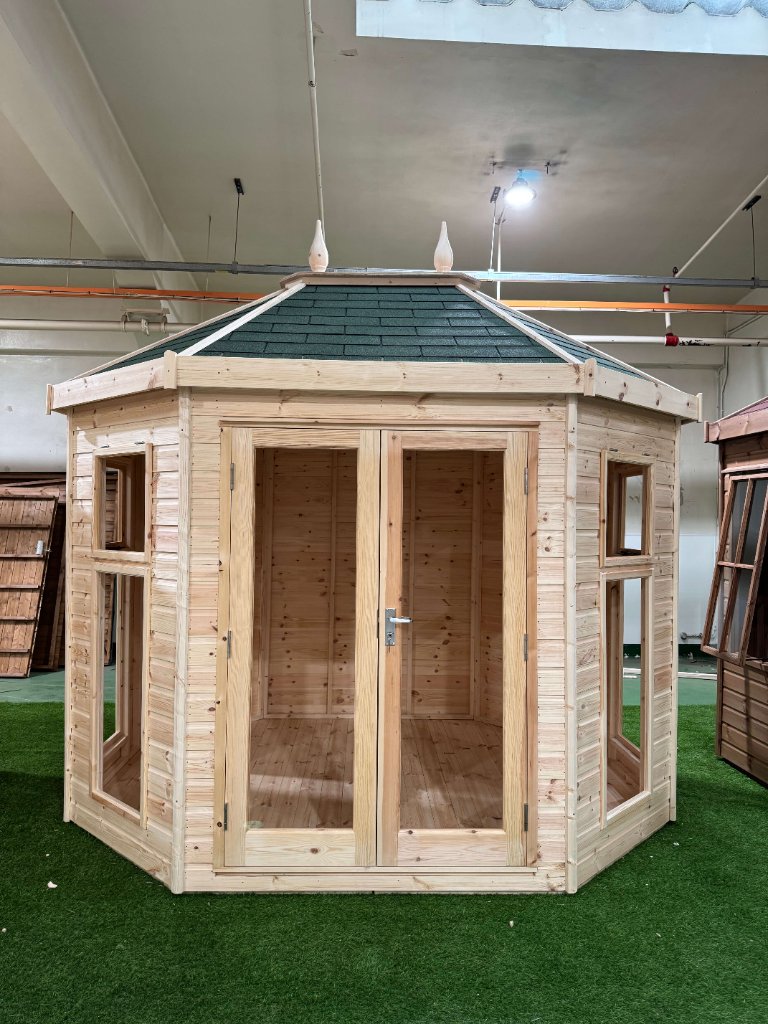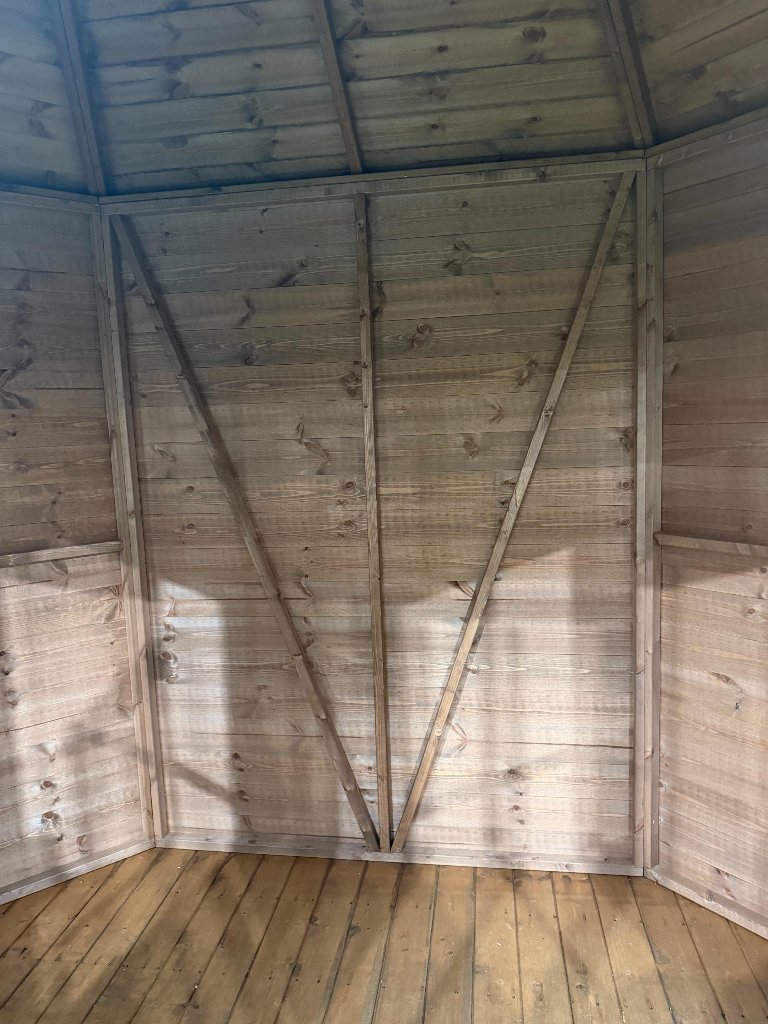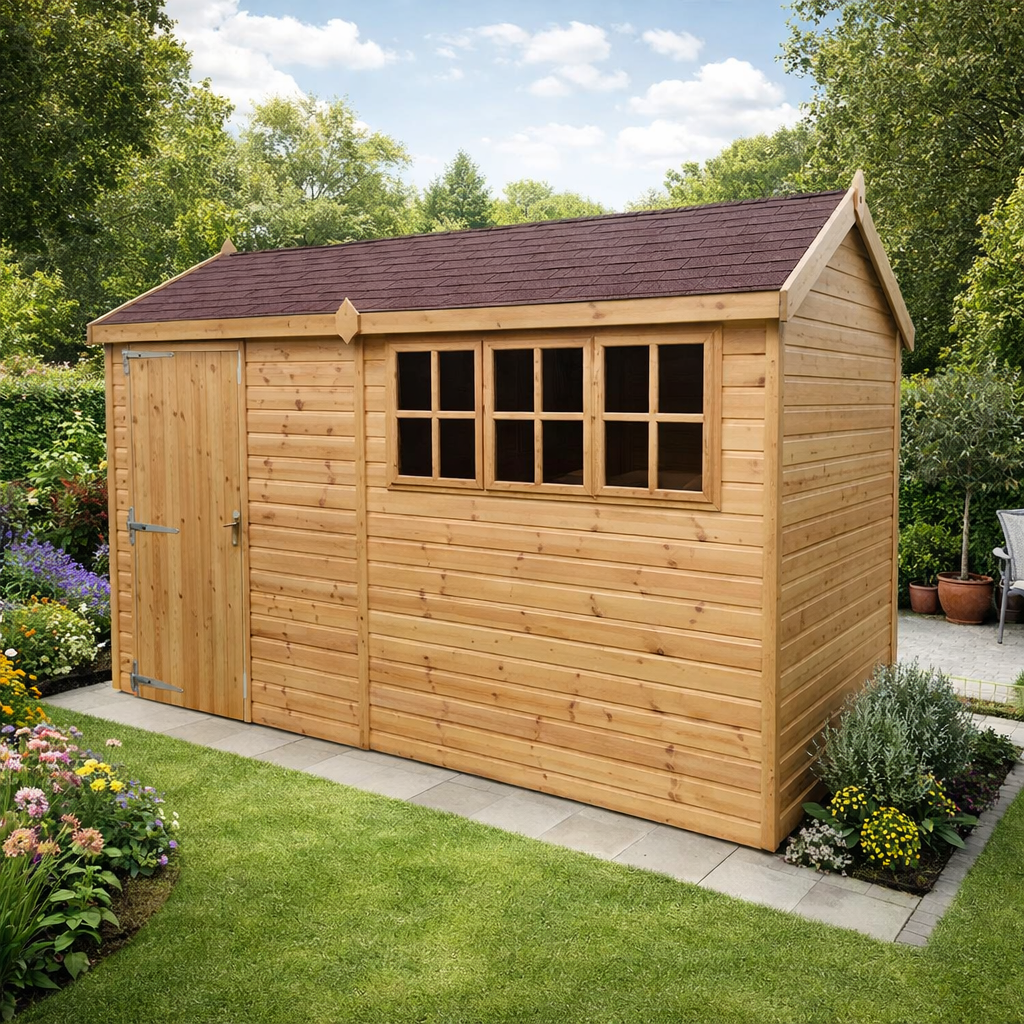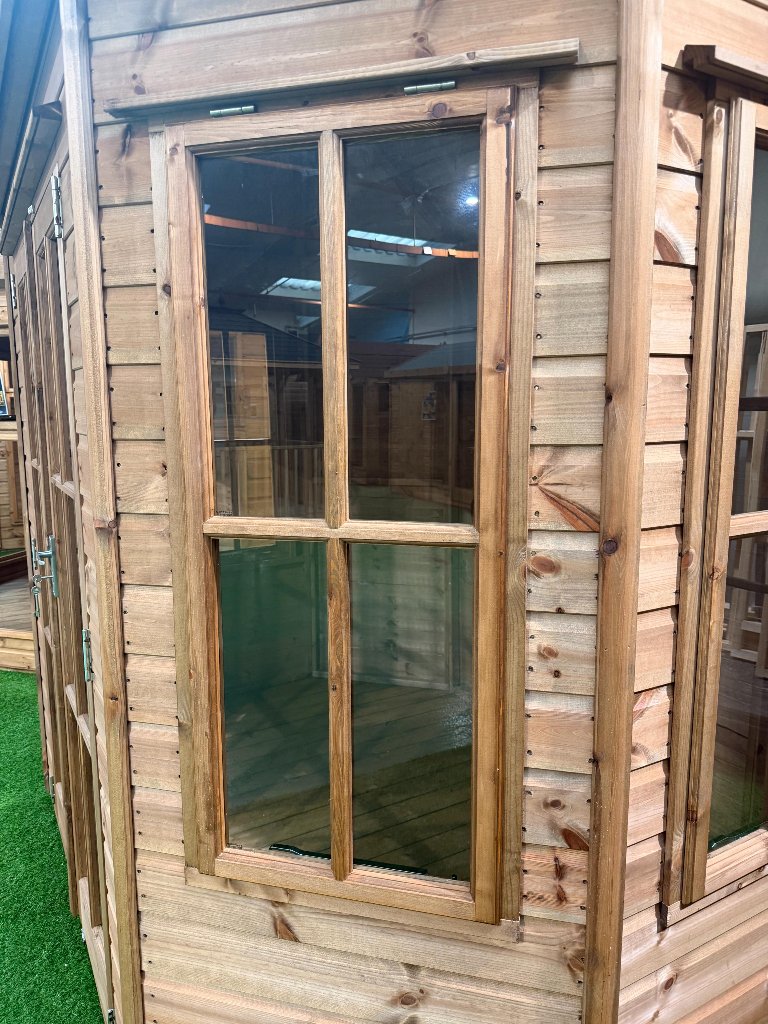
If you've been shopping for a garden shed, you've probably encountered terms like "shiplap", "loglap", "tongue and groove" and "overlap" — and wondered what they all mean. Cladding is the timber that forms the walls of your shed, and the type you choose affects durability, weather resistance, insulation and appearance.
What Is Cladding?
Cladding refers to the exterior boards that make up the walls of a timber garden building. The profile (cross-section shape) of these boards determines how they interlock, how well they shed water, and how strong the wall is.
Let's break down each type:
Overlap Cladding
Overlap is the simplest and cheapest form of construction. Boards are nailed horizontally so that each board overlaps the one below it — like roof tiles.
Pros:
- Lowest cost
- Simple construction
Cons:
- Least weather-resistant — water can be driven between boards in strong wind
- Less secure — boards can be pried apart
- Shorter lifespan
- Not suitable for larger buildings
Overlap is typically found on budget sheds. We don't use overlap construction on any of our buildings — all our sheds use tongue and groove or shiplap for superior weather resistance and strength.
Tongue & Groove
Tongue and groove boards have a protruding "tongue" on one edge and a matching "groove" on the other. The boards interlock, creating a strong, rigid wall with no gaps.
Pros:
- Strong, interlocking construction
- No gaps for draughts or water
- Better security than overlap
- Smooth, attractive appearance
Cons:
- More expensive than overlap
- Requires precise manufacturing
Tongue and groove is the foundation of all our standard shed construction.
Shiplap
Shiplap is a specific profile of tongue and groove that includes an additional shaped lip. This lip creates a slight overlap between boards that channels rainwater down the face of the wall — preventing water from sitting in the joint.
Pros:
- All the benefits of tongue and groove
- The shaped lip actively channels water away from joints
- Excellent weather resistance
- Premium appearance
Cons:
- More expensive than basic tongue and groove
Shiplap is our standard cladding on most of the garden sheds in our Shedlands and Sovereign ranges. It offers the best balance of durability, weather resistance and value.
Loglap
Loglap is a thicker version of tongue and groove with a rounded external face. This rounded profile gives the shed the appearance of a traditional log cabin.
Pros:
- Looks like a log cabin
- Thicker timber (typically 19mm) provides better insulation
- Excellent weather resistance
- Premium, substantial appearance
Cons:
- More expensive than shiplap
- Heavier
Loglap is a popular upgrade for customers who want the log cabin aesthetic. It's available as a cladding upgrade on many of our sheds.
Premier Shiplap
Our Premier Shiplap is an upgraded, thicker version of standard shiplap. At 16mm thick (compared to 12mm for standard), it offers:
- Better insulation
- Improved soundproofing
- Greater durability and rigidity
- A more premium, solid feel
Which Cladding Should You Choose?
| Cladding | Thickness | Best For | Price | |----------|----------|----------|-------| | Shiplap (T&G) | 12mm | Standard garden sheds — great all-rounder | ££ | | Premier Shiplap | 16mm | Upgraded durability and insulation | £££ | | Loglap | 19mm | Log cabin appearance, premium buildings | £££ | | Pressure Treated | Various | Maximum rot protection, minimal maintenance | ££££ |
Pressure Treatment
In addition to the cladding profile, you can choose between dip-treated and pressure-treated timber. Pressure treatment forces preservative deep into the wood fibres, providing superior, long-lasting protection against rot and decay. Read our guide to treatment types for more information.
Explore Our Range
All our sheds and summerhouses use tongue and groove or shiplap construction as standard — no cheap overlap boards. Browse our garden sheds to see the cladding options available on each model, or visit our show site in Newark-on-Trent to see the difference in person.
Browse our Sheds
Ready to find the right garden building? Explore our full range with free installation included.
View Sheds