Buying a garden shed is an investment that should last 15 years or more, so it pays to get the decision right first time. This guide walks you through every consideration — from sizing and roof style to cladding, treatment and base preparation — so you can choose with confidence.
What Will You Use Your Shed For?
Before anything else, think about how the shed will be used. A small storage shed for tools and a lawnmower has very different requirements to a workshop where you'll spend hours at a time. Here are the most common uses:
- General storage — bikes, tools, garden equipment, seasonal items
- Workshop — DIY, crafting, or a hobby space where you need headroom and natural light
- Potting shed — a mix of greenhouse and storage for keen gardeners
- Secure storage — bikes, motorbikes or valuable equipment that needs extra security
If you're planning to spend time inside the shed working or relaxing, consider a taller eaves height and additional windows for natural light.
Choosing the Right Size
The most common mistake people make is buying a shed that's too small. As a rule of thumb, buy the largest shed your garden can comfortably accommodate — you will always find things to store.
Popular sizes and their typical uses:
- 6×4 — Compact storage for a small garden; fits a lawnmower and basic tools
- 8×6 — The UK's most popular shed size; good general-purpose storage
- 10×8 — Spacious enough for a workbench alongside storage
- 12×8 — Workshop-sized; plenty of room for tools, equipment and workspace
Remember to check that you have enough clearance around the shed for installation — we recommend at least 30cm on each side for access during construction.
Apex vs Pent Roof Styles
The roof style affects both the look and the practicality of your shed:
Apex Roof
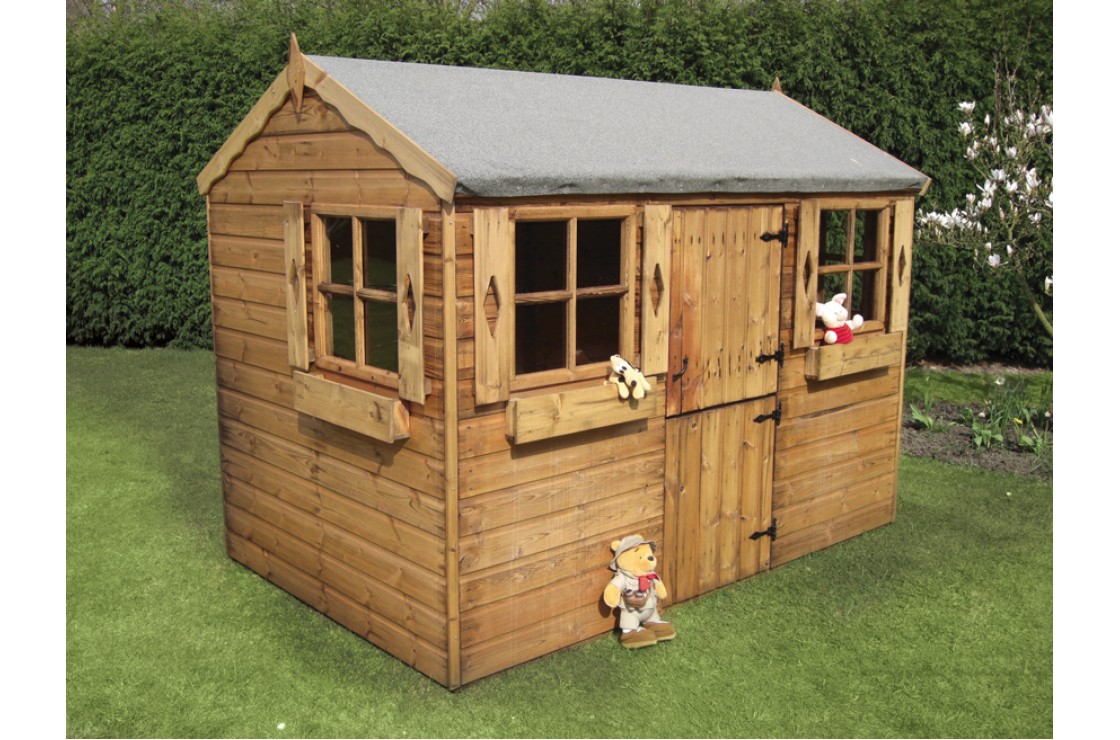
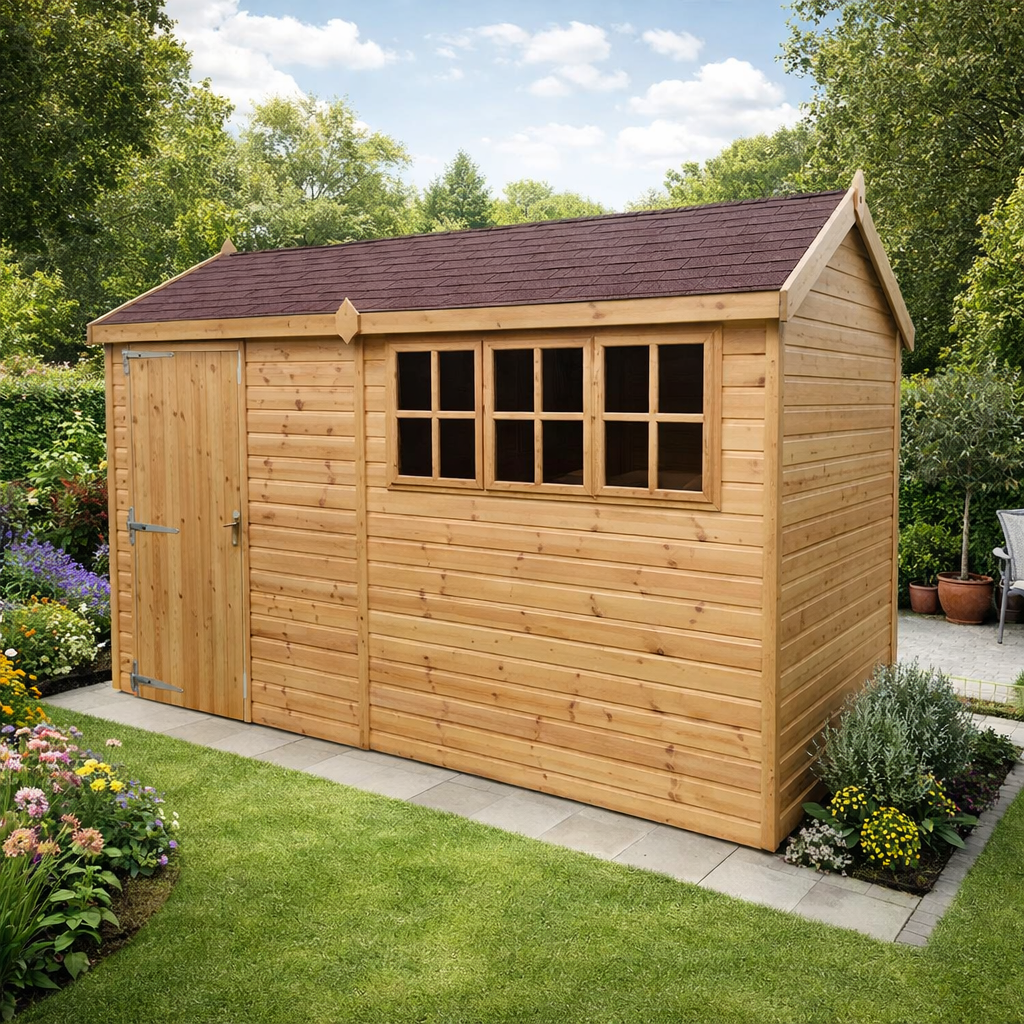
An apex roof has a traditional pitched roofline with the peak running along the length of the shed. The door is typically on the gable end (the triangular wall). Apex sheds offer more headroom in the centre and are the classic choice for most gardens.
Pent Roof
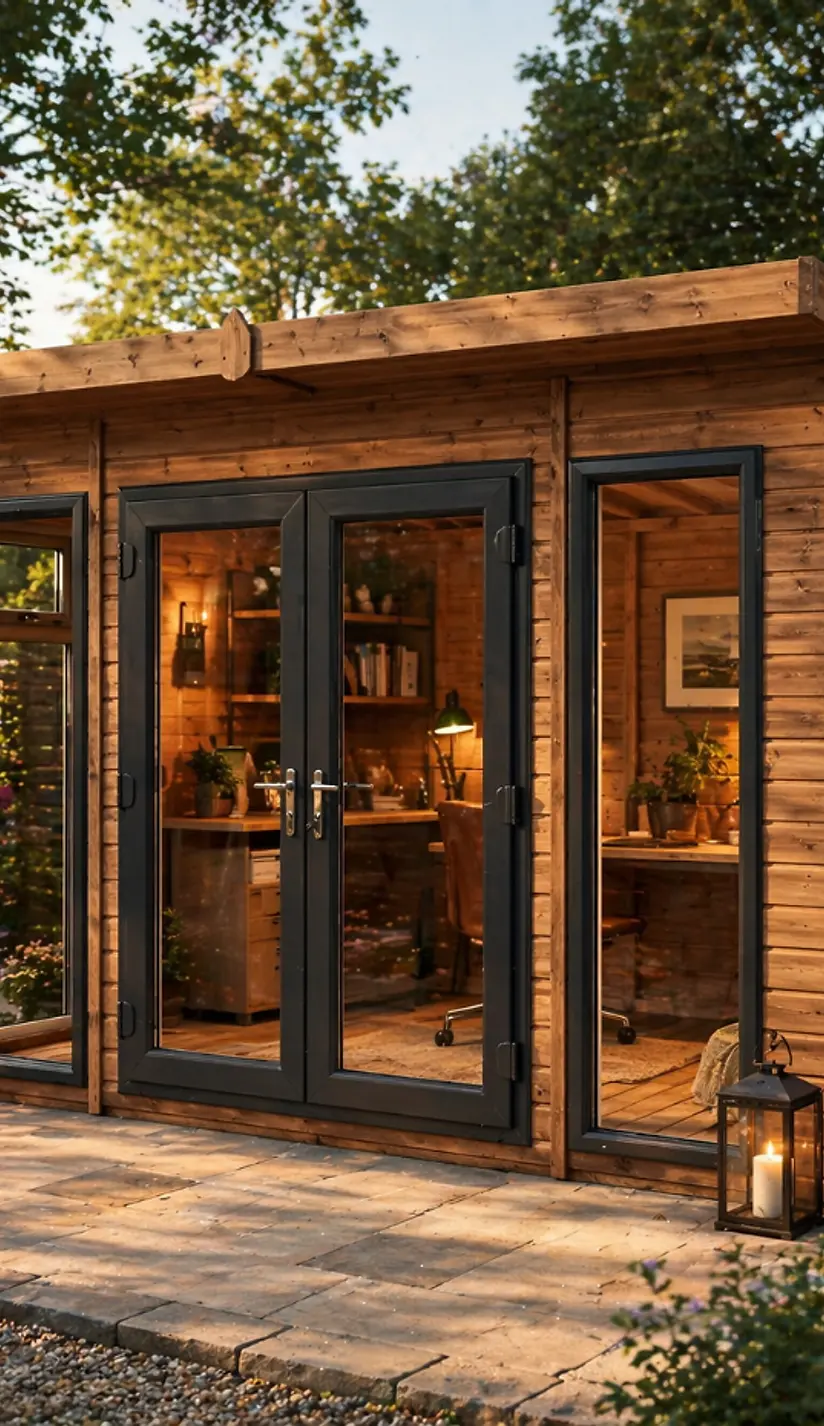
A pent roof has a single slope from one side to the other, giving a more contemporary, flat-roofed appearance. Pent sheds are ideal when you want to position the shed against a wall or fence, as the sloping roof directs rainwater away from the boundary.
Understanding Cladding Types
Cladding is the timber that forms the walls of your shed. The type of cladding affects durability, weather resistance and appearance.
Shiplap Tongue & Groove
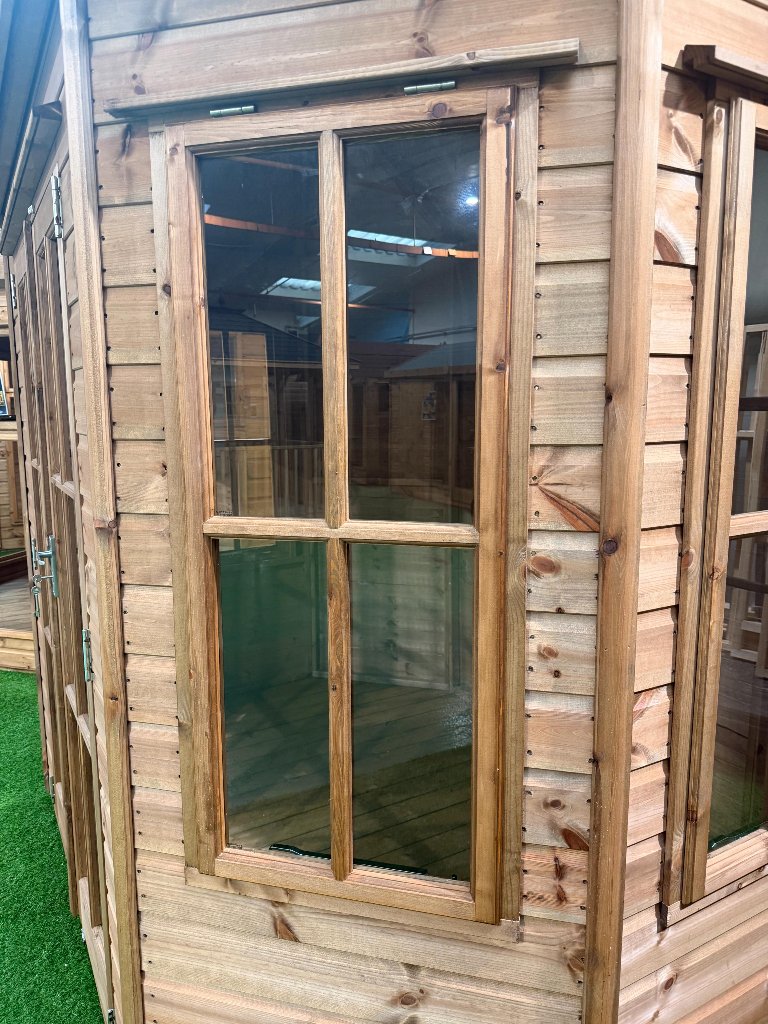
Shiplap is our standard cladding on most sheds. Each board has a shaped profile with a lip that channels rainwater away from the joint, making it highly weather-resistant. The tongue and groove construction creates a strong, interlocking wall that's far superior to overlap construction.
Log Lap
Loglap cladding has a rounded face that gives the appearance of a log cabin. It's thicker than standard shiplap (typically 19mm) and offers excellent insulation and a premium look. Loglap is a popular upgrade for those who want the aesthetic of a log cabin at a lower price point.
Premier Shiplap
Our Premier Shiplap is an upgraded, thicker version of standard shiplap — typically 16mm rather than 12mm. The extra thickness provides better insulation, improved durability and a more substantial feel.
Pressure Treated vs Dip Treated
Timber treatment is essential to protect against rot, fungal decay and insect attack.
Dip-treated sheds are submerged in a preservative treatment. This protects the exterior surfaces but doesn't penetrate deeply into the timber. Dip-treated sheds typically come with a 10-year anti-rot guarantee and require regular re-treatment.
Pressure-treated timber is placed in a vacuum chamber where preservative is forced deep into the wood fibres. This provides superior, long-lasting protection that doesn't require re-treatment. Pressure-treated sheds typically come with a 15-year guarantee.
Base Preparation
Every shed needs a solid, level base. The most common options are:
- Concrete base — the most durable and permanent option
- Paving slabs — a good balance of cost and durability
- Timber bearers — suitable for smaller sheds on level ground
- Plastic grid base — a modern, eco-friendly option
The base should be the exact size of the shed footprint, or slightly larger, and perfectly level. An uneven base will cause the shed to twist, leading to door alignment problems and potential water ingress.
Free Installation Included
At Buckley Garden Buildings, every shed we supply includes free professional installation by our experienced fitting team. Unlike flat-pack sheds that arrive in pieces for you to assemble, our buildings are constructed on-site by experts — so you can be confident the job is done properly.
We deliver and install across mainland UK (excluding Scotland). Browse our full range of garden sheds to find the right building for your garden, or request a custom build if you need something tailored to your exact specifications.
Browse our Sheds
Ready to find the right garden building? Explore our full range with free installation included.
View Sheds