All timber used in garden buildings must be treated to protect it against rot, fungal decay and insect attack. But not all treatments are equal. The two main methods — dip treatment and pressure treatment — offer very different levels of protection and longevity.
Why Timber Needs Treatment
Timber is a natural material. Without treatment, it's vulnerable to:
- Fungal rot — wood-destroying fungi that thrive in damp conditions
- Insect attack — wood-boring beetles and other insects
- Moisture damage — swelling, warping and splitting caused by wet/dry cycles
- UV degradation — sunlight gradually breaks down the surface of unprotected timber
Treatment involves applying chemical preservatives that prevent these issues. The method of application determines how deeply the preservative penetrates the wood.
Dip Treatment
Dip treatment (also called dip-and-dye) is the most basic form of timber treatment. The timber is submerged in a tank of preservative solution, coating the exterior surfaces.
How it works:
- The timber is briefly dipped in a water-based preservative
- The preservative coats the surface but doesn't penetrate deeply
- A golden brown or green tint is often added as a colour indicator
Pros:
- Lower cost
- Provides a visible treatment colour
- Suitable for buildings that will be regularly re-treated
Cons:
- Only surface-level protection
- The cut ends of timber (where moisture enters most easily) may not be fully protected
- Requires re-treatment every 1–2 years to maintain protection
- Typically comes with a 10-year anti-rot guarantee (with proof of annual re-treatment)
Best for: Budget-conscious buyers who are happy to maintain the building regularly.
Pressure Treatment
Pressure treatment (also called vacuum pressure impregnation or Tanalising) forces preservative deep into the timber under high pressure in a vacuum chamber.
How it works:
- The timber is placed in a sealed treatment vessel
- A vacuum draws air out of the wood cells
- The vessel is flooded with preservative
- Hydraulic pressure forces the preservative deep into the timber structure
- The preservative bonds with the wood fibres at a molecular level
Pros:
- Deep penetration — preservative reaches the core of the timber, not just the surface
- Superior, long-lasting protection against rot, fungal decay and insect attack
- No re-treatment required — the protection is permanent for the life of the timber
- Typically comes with a 15-year anti-rot guarantee
- Ideal for timber in ground contact (bearers, floor joists)
Cons:
- Higher initial cost
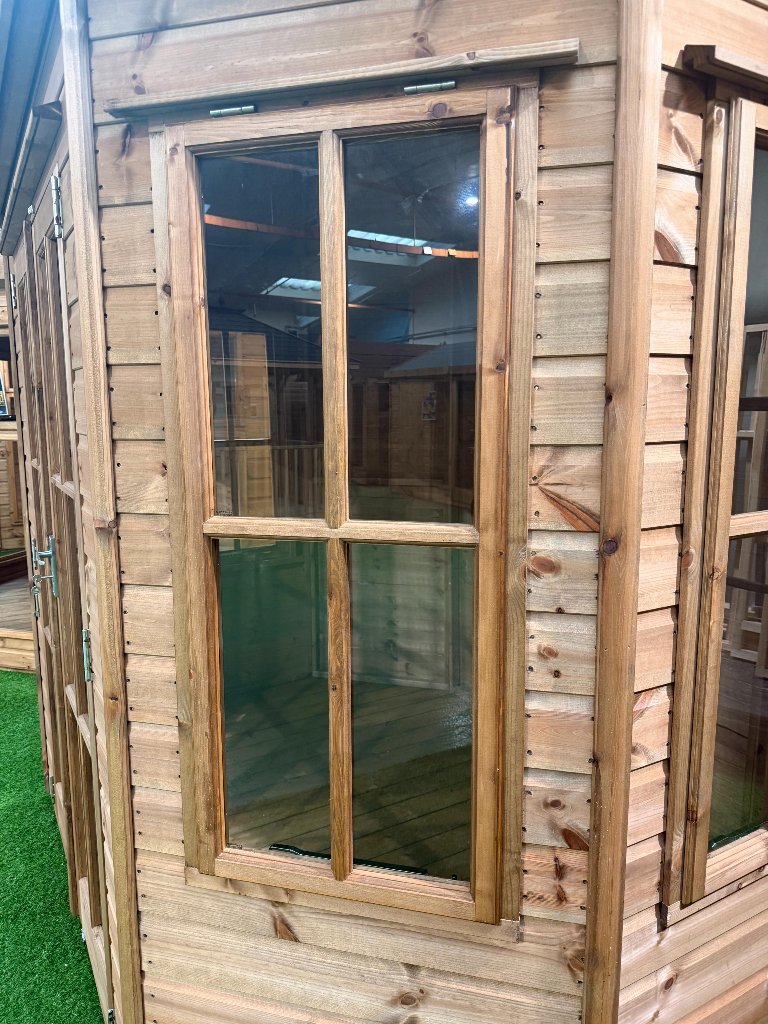
- The timber may have a slightly green or brown tint initially (which weathers to a natural grey)
Best for: Buyers who want maximum protection with minimal maintenance.
Which Should You Choose?
| Feature | Dip Treated | Pressure Treated | |---------|-------------|------------------| | Protection level | Surface | Deep penetration | | Guarantee | 10 years* | 15 years | | Re-treatment needed | Every 1–2 years | Not required | | Cost | Lower | Higher | | Best for | Budget buyers | Low maintenance |
*10-year guarantee requires proof of annual re-treatment with a wood preservative.
Pressure Treatment as an Upgrade
On many of our garden sheds and summerhouses, pressure treatment is available as an optional upgrade. If you want a building that requires minimal ongoing maintenance and offers maximum longevity, pressure treatment is worth the investment.
Maintaining Treated Timber
Even pressure-treated timber benefits from occasional care:
- Apply a water-repellent finish — every 2–3 years to protect against moisture absorption
- Check cut ends — any timber cut during installation should be treated with end-grain preservative
- Keep vegetation clear — don't let plants grow against the timber, as they trap moisture
- Ensure good ventilation — allow air to circulate around the building to prevent condensation
For full maintenance guidance, read our guide to painting and maintaining your garden building.
Explore Our Range
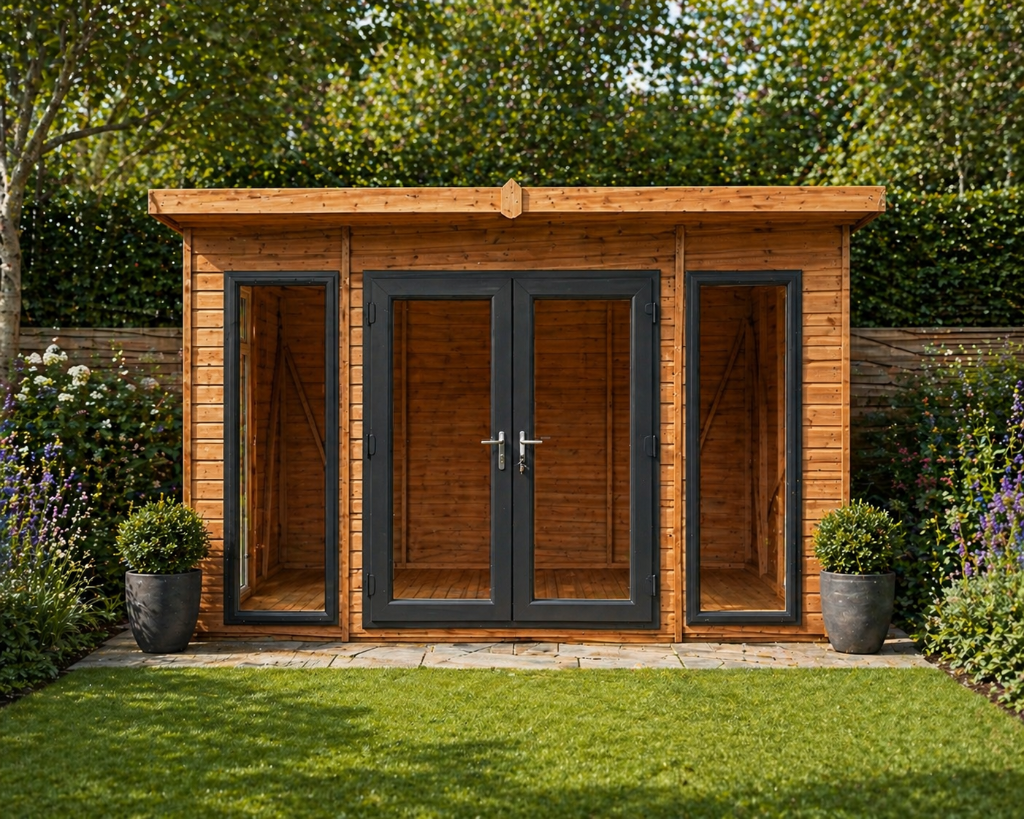
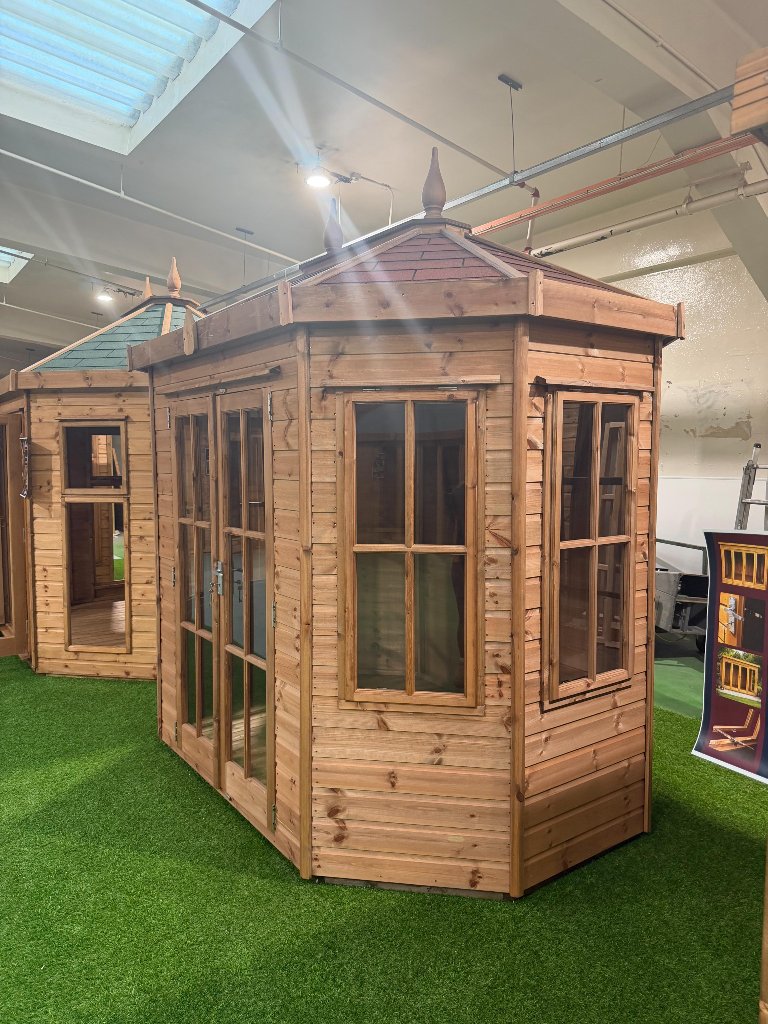
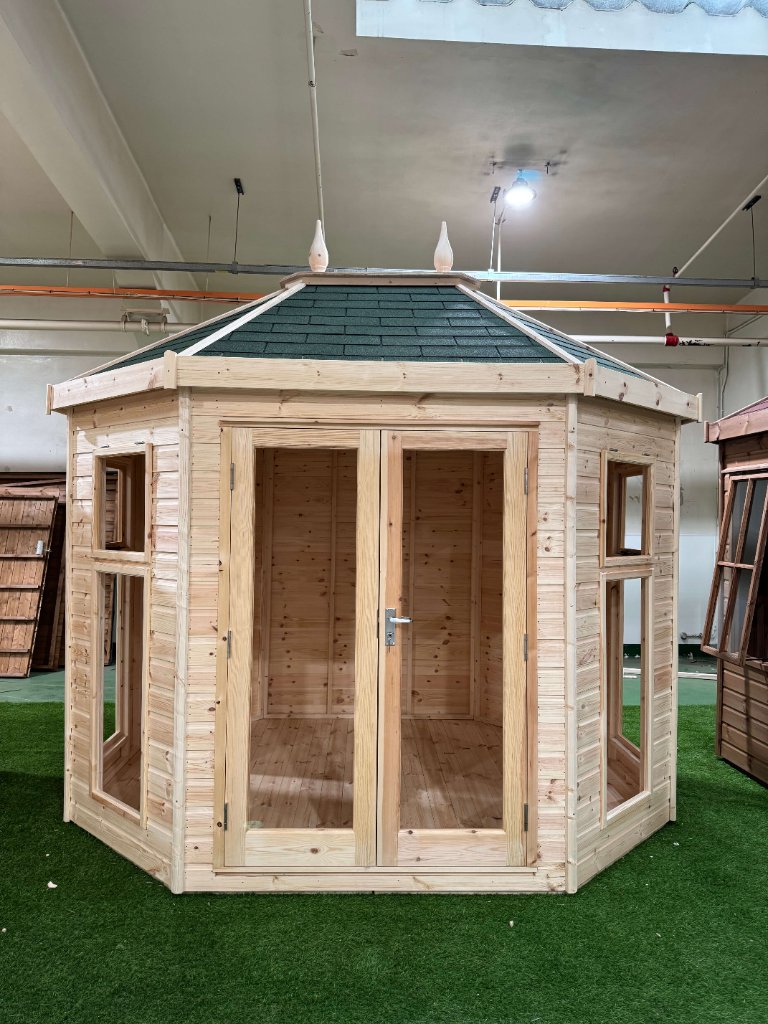
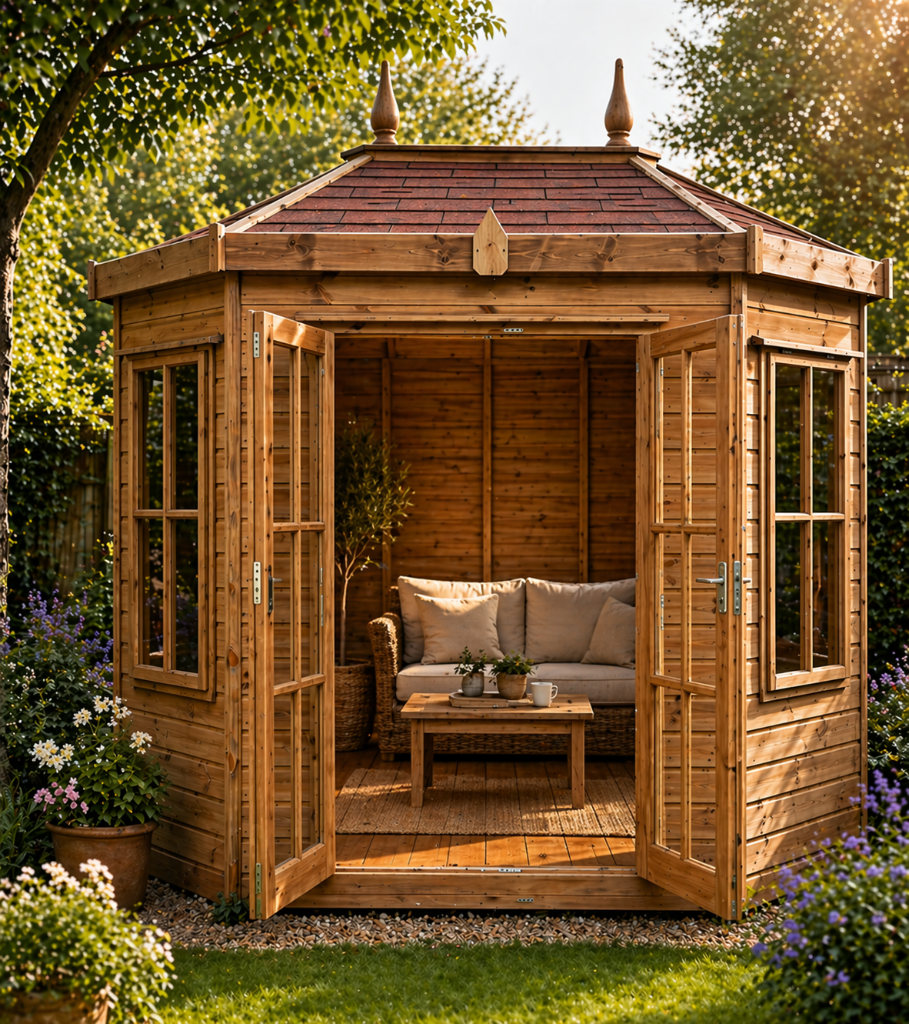
All our garden buildings use treated Scandinavian redwood timber from FSC-certified forests. Browse our sheds, summerhouses and garden rooms to see the treatment options available on each model.